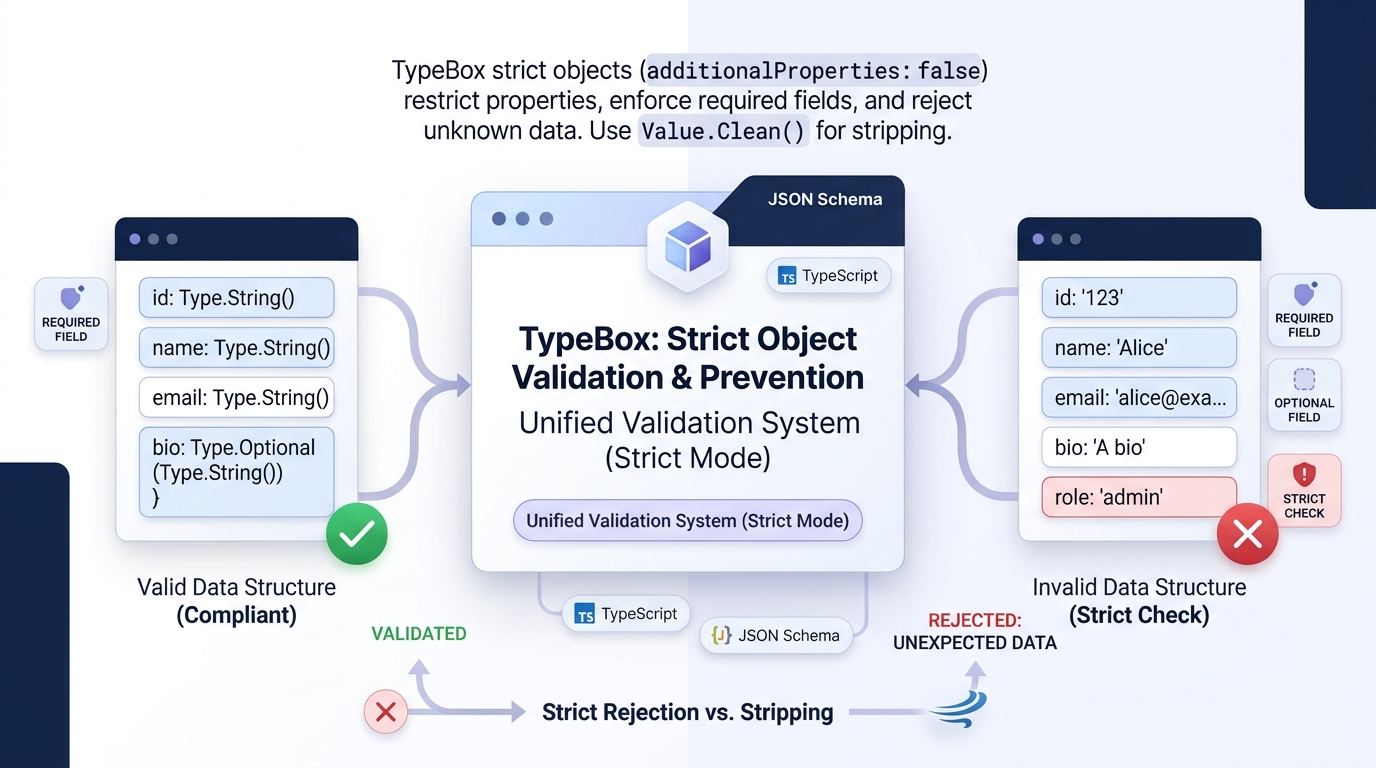
Yes, TypeBox allows developers to define strict object properties by controlling whether additional properties are accepted during validation. This makes it possible to restrict an object to predefined fields and reject unexpected properties that do not belong to its schema.
TypeBox strict objects are useful when applications need predictable data structures, reliable API validation, and better control over incoming information. By combining defined properties, required fields, and additional property restrictions, developers can create object schemas that maintain consistent data formats across their applications.
How TypeBox Defines Strict Objects
TypeBox defines object structures through Type.Object, allowing developers to specify which properties an object can contain. Each property can have its own data type and validation requirements, giving developers control over the expected structure of incoming data.
To make an object strict, developers can configure its additional property behavior. This allows the schema to distinguish between predefined properties and unexpected fields, helping applications maintain consistent object structures during runtime validation.
Preventing Additional Properties in TypeBox
TypeBox supports restricting additional properties through the additionalProperties setting. When this setting is disabled, an object can contain only the properties explicitly defined in its schema, and unexpected fields fail validation.
This is particularly useful for API requests and configuration objects where accepting unknown properties could create inconsistent data. Strict validation ensures that incoming objects follow the expected structure instead of silently accepting fields that the application does not recognize.
Difference Between Required and Optional Properties
Required and optional properties determine whether a field must exist inside an object. TypeBox treats these requirements separately from additional property restrictions, allowing developers to control both field presence and the overall object structure.
A required property must be included for the object to pass validation, while an optional property can be omitted without making the object invalid. However, optional properties must still follow their defined data types when provided, and strict object settings can prevent unrelated fields from being accepted.
How TypeBox Validates Object Properties
TypeBox validates object properties by checking incoming values against the rules defined in the schema. These rules can include data types, required fields, string constraints, numeric limits, and other supported validation conditions.
During runtime validation, the object must satisfy the applicable property requirements and additional property restrictions. This helps developers ensure that incoming data follows the expected structure before it is used by application logic or passed to other services.
Handling Unexpected Properties During Validation
Unexpected properties are fields that appear in an object but are not included in its schema definition. In a strict TypeBox object, these fields are rejected when additional properties are disabled, preventing unrecognized information from passing validation.
This behavior is important when working with external API requests, user-submitted data, and application settings. Rejecting unexpected properties makes data structures more predictable and helps developers identify incorrect or unsupported fields before they affect application behavior.
Common Use Cases for Strict Object Schemas
Strict object schemas are useful whenever an application requires a clearly defined data format. They help developers maintain consistent structures across different application components and reduce the possibility of unexpected fields entering important workflows.
Common use cases include:
- API request validation: Accept only supported request properties.
- User registration: Restrict submitted fields to approved account information.
- Configuration objects: Prevent unknown settings from being accepted.
- Database operations: Validate object structures before processing data.
- Authentication systems: Control which properties are accepted in authentication requests.
- Data exchange: Maintain predictable object formats between services.
Best Practices for Defining Strict Objects
When creating strict TypeBox schemas, developers should define only the properties required by their application and apply appropriate validation rules to each field. Required and optional properties should be selected carefully so that the schema reflects the actual data structure rather than rejecting legitimate input.
It is also important to consider how strict validation affects nested objects and composed schemas. Each object level may need its own additional property restrictions, depending on the intended structure. Reviewing these rules helps prevent unexpected fields while keeping schema validation consistent and maintainable.
Conclusion
TypeBox makes it possible to define strict object properties by controlling additional property acceptance within object schemas. Developers can specify allowed fields, enforce required properties, and reject unexpected data during runtime validation. Using TypeBox strict objects helps maintain predictable data structures, improve API request validation, and create more reliable TypeScript applications.